A real experience from Seminyak — and why it matters more than most people realize
During a recent stay in Seminyak, I lived in two very different places back to back. One was a well-known five-star hotel. The other was a private villa with no brand name, no marketing story, and a price roughly half of what the hotel charged. Going in, I expected the difference to be mostly about service, atmosphere, and overall “luxury.” What I didn’t expect was that one small, almost boring detail would end up telling me far more about long-term living in Bali than any brochure or sales pitch ever could.
I travel with a filtered shower head. It’s not a lifestyle statement or a health trend — it’s simply something I’ve learned to do after years of living and working in tropical environments. I installed the exact same filter in both places. After two days in the five-star hotel, the filter cartridge had turned almost completely black. A few days later, after staying in the villa, the filter still looked nearly new.
“Nothing reveals a building’s real priorities faster than the systems you use every day.”
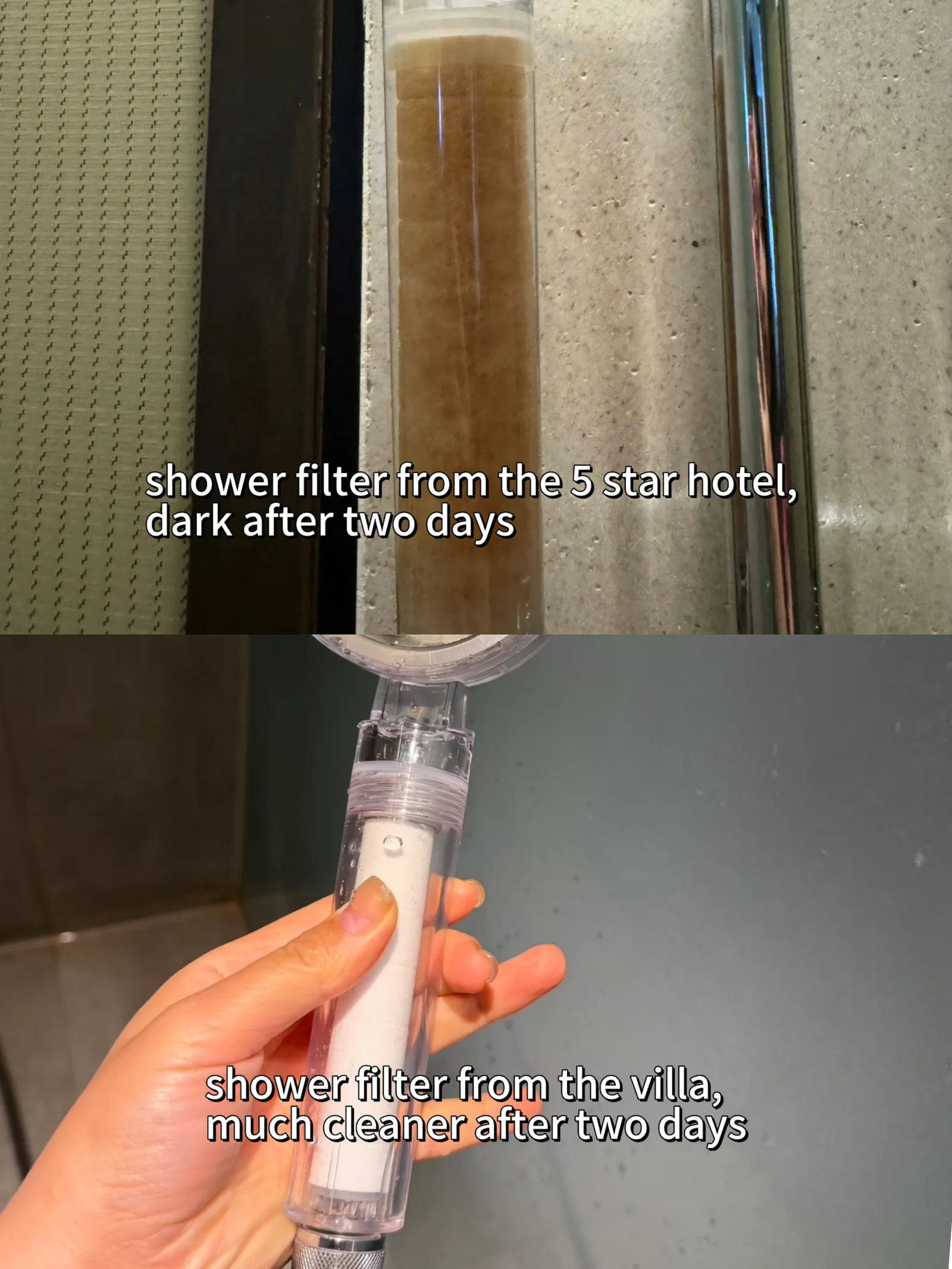
That moment stayed with me. Not because the hotel was bad — it wasn’t. The service was excellent, the design was polished, and everything worked exactly as a luxury hotel is meant to work. But it revealed something many people misunderstand about Bali: price and star ratings do not automatically translate into long-term livability.
Five-star hotels are optimized for short stays. They focus on visual impact, immediate comfort, service flow, and how a guest feels in the first few days. What they rarely optimize for is what happens when someone uses the same water, pipes, and systems every single day for months or years.
Private villas operate under a different logic — or at least, they should. The villa I stayed in wasn’t flashy. But its water system was clearly designed and maintained for continuous use. The filtration was consistent, the supply was stable, and there were no obvious shortcuts. That contrast made something click for me.
In Bali, many properties are designed to sell well or photograph beautifully. Far fewer are designed to be lived in long term.
From a professional perspective, water quality in Bali is not about luxury or preference. It’s a signal. It tells you how a property was actually designed, where costs may have been quietly reduced, and whether long-term use was ever part of the original thinking.
A villa that neglects its water system often neglects other invisible risks as well: waterproofing details, drainage logic, humidity control, pipe aging, and maintenance access. These problems rarely explode on day one. They surface slowly, over one or two rainy seasons, when the buyer is already emotionally and financially committed.
This is why many rental operators and long-term tenants eventually reach out for help after problems start appearing. If you are already operating or renting out a villa and suspect water or system-related issues, this is exactly the kind of situation handled through a full villa inspection at Bali Villa Inspection - an Independent villa risk assessments for foreigners renting property in Bali.
I’ve met many people who say they love Bali, but couldn’t stay long term. Often, the issue isn’t culture, heat, or pace of life. It’s accumulated friction — skin irritation, hair issues, constant small repairs, or a low-level discomfort they can’t quite explain.
Eventually, they realize the problem isn’t Bali itself. It’s that the place they’re living in was never designed for long-term habitation. Some properties here are built to sell. Some are built to impress. Very few are built to last.
“Most villas don’t fail dramatically. They fail quietly — and expensively.”
When people ask me about buying a villa in Bali, they often focus on design, rental yield projections, or how “luxury” a property appears. But the real question is much simpler:
Is this a place you can live in — or hold — without it slowly turning into a problem?
That answer is never found in renderings, marketing decks, or ROI tables. It’s found in systems you don’t see unless you know exactly where to look. This is why I insist that villa evaluation must happen before any deposit is paid.
I don’t sell villas. I don’t represent developers. I don’t earn commissions. My work happens at one moment only: before money changes hands.
Through VillaAudit, I help buyers make a single, clear decision:
Is this villa worth committing your capital, time, and future comfort to — or not?
Sometimes the answer is Buy.
Sometimes it’s Don’t Buy.
Sometimes it’s Only if the terms change.
You can understand the service more clearly at Bali Villa Audit. And if you’re already considering a specific property and want to discuss whether an independent review makes sense at your current stage, you can reach us directly here. That clarity, before a deposit is paid, is far less costly than discovering the truth after the purchase.
One lesson stayed with me from this experience. In Bali, if the water you use every day already feels wrong, the property usually will too — eventually. And by the time that realization arrives, the decision is often no longer easy to reverse. If you’re serious about living in Bali or buying a villa here, this is the stage where the right questions still save you years of friction.
More insights on markets and investment strategy.
Infrastructure Gap, Connectivity Land, and a Development Model Nobody Is Talking About
ReadA deep dive into Bali Sanur’s emerging medical living asset class. Explore investment logic, global comparisons with Phuket and Singapore, target buyers, and long-term value potential.
ReadA structural shift in Bali real estate: from single-income rental assets to multi-layered wellness-driven investment models.
ReadUnderstanding the hidden dynamics of Bali’s real estate market and why many villas struggle to deliver the rental returns investors expect.
ReadBuild a strategy framework or compare markets before you commit.